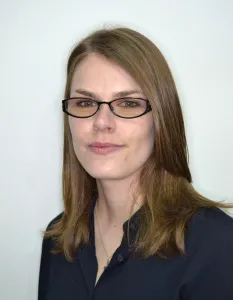
CNRS research director at the Paris Brain Institute, co-head of the ARAMIS Lab and a fellow of PR[AI]RIE, the PaRis Artificial Intelligence Research InstitutE
From multi-atlas registration to diffusion priors: a decade of individual anomaly detection in PET imaging
Detecting anomalies in medical imaging is a long-standing challenge, and even more so in PET imaging of dementia, where lesions tend to be subtle and diffuse. This talk will trace three stages in our work on individual anomaly detection in PET imaging.
I will first present our original multi-atlas registration and fusion approach, in which a subject-specific pseudo-healthy model is built by registering a set of healthy control images to the target subject and fusing them into a weighted pseudo-healthy appearance model, from which an anomaly map is derived via a voxel-wise z-score. I will then show how this framework can be revisited using deep learning-based registration.
In a second part, I will turn to our work on variational autoencoders (VAEs) for pseudo-healthy reconstruction. Since evaluating such methods usually relies on ground truth lesion masks, which are not available in our context, we first designed a dedicated evaluation framework, which we then used to benchmark multiple VAE variants for the reconstruction of pseudo-healthy images. I will then discuss how model variability across random seeds affects the resulting anomaly maps, and how we identified a reconstruction-detection trade-off and explored ways to mitigate it.
In a third part, I will present our most recent generative approaches, a method built on Bayesian Flow Networks and a Bayesian inverse problem formulation with diffusion priors.
Ninon Burgos is a CNRS research director at the Paris Brain Institute, co-head of the ARAMIS Lab and a fellow of PR[AI]RIE, the PaRis Artificial Intelligence Research InstitutE. She completed her PhD in 2016 at University College London in the Centre for Medical Image Computing under the supervision of Sébastien Ourselin and obtained my Habilitation (ability to supervise research, HDR) from Sorbonne Université in 2022. In 2019, she received the ERCIM Cor Baayen Young Researcher Award.
Her research focuses on the processing and analysis of medical images, on the use of images to guide diagnosis, and on the application of these methods to the clinic. In particular: i) anomaly detection using both traditional image processing techniques and deep generative models, ii) the translation of machine learning approaches for quality control and computer-aided diagnosis into clinical practice, iii) reproducible medical image processing and computer-aided diagnosis with machine learning, and iv) the development of open-source software. These efforts aim to enhance the reliability and scalability of research in clinical neuroscience and support practical advancements in medical imaging.